
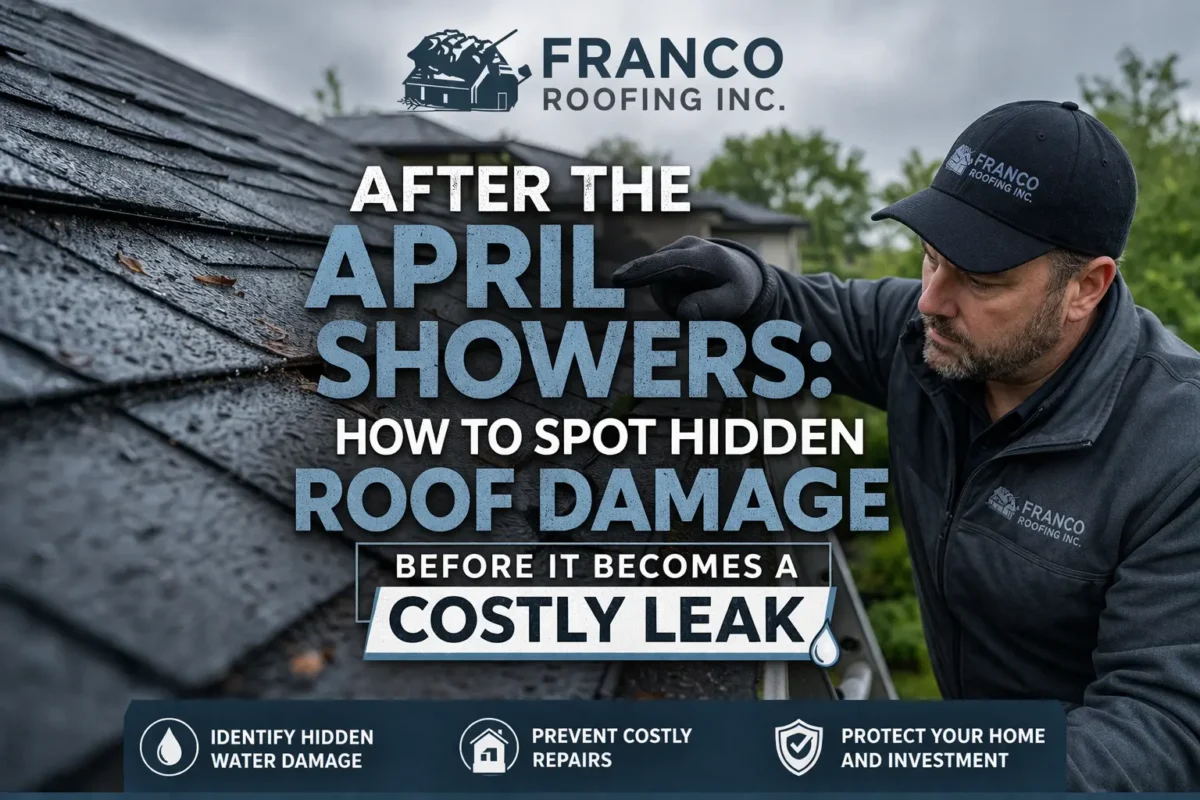
Your roof made it through another Pennsylvania winter. The ice dams are gone, the snow is a memory — and now April is doing what April does, sending weeks of steady rain across Bucks County and Montgomery County. Everything feels fine. No obvious drips. No ceiling stains. Nothing that screams “problem.”
Here’s the part that catches most homeowners off guard: spring rain doesn’t just test your roof—it reveals damage that’s been quietly building all winter. By the time you notice a stain on your ceiling or find moisture in your attic, the water has already found a way in. And in our 54 years serving Bucks County and Montgomery County, we’ve seen how a small, hidden problem in April can turn into a major, expensive repair by summer.
You’ve probably done a quick glance at the roof from the driveway and thought “looks fine from here.” Most of the time, that’s not enough. The damage that matters—lifted flashing, cracked underlayment, compromised step flashing around chimneys, saturated decking—isn’t visible from the ground.
This article walks you through exactly what to look for after spring rain, why these issues happen on Pennsylvania roofs, and how to catch them early—before they turn into a costly emergency. Franco Roofing, Inc. has been helping Bucks County homeowners protect their homes since 1971. Here’s what 54 years of post-storm inspections has taught us.
What You’ll Learn
- What counts as “hidden” roof damage—and why spring rain reveals it
- The real causes behind post-rain roof damage on Pennsylvania homes
- How to inspect your Bucks County or Montgomery County roof after April storms
- What to do—and when to call a professional
- Why Bucks County homeowners trust Franco Roofing for post-storm inspections
- Frequently asked questions about spring roof damage in Pennsylvania
What Is Hidden Roof Damage—and Why Does Spring Rain Reveal It?
Hidden roof damage refers to structural or material failures that aren’t visible to the naked eye from the ground—but are actively allowing water to penetrate your home’s exterior. Unlike a missing shingle or a visible hole, these are issues buried under layers of roofing material or tucked behind architectural features like chimneys, dormers, and skylights.
Winter in Pennsylvania is tough on roofs. Repeated freeze-thaw cycles expand and contract roofing materials, flashing, and sealants. Ice dams force water under shingles and into the decking. Snow load stresses the entire roofing system. By the time spring arrives, a roof that looks intact from the driveway may have several hidden vulnerabilities.
Common warning signs to watch for after April rain:
- Water stains on interior ceilings or walls (even faint discoloration matters)
- Damp or musty smell in the attic after rain
- Soft or spongy spots on the roof surface when walked
- Granule buildup in gutters or downspouts (accelerated shingle wear)
- Lifted, buckled, or curling shingles visible from ground level
- Rust stains or separation around metal flashing
- Peeling paint or bubbling drywall on upper-floor ceilings
The Real Causes Behind Spring Roof Damage on Pennsylvania Homes
Spring rain doesn’t create roof damage—it exposes it. The real causes trace back to what Pennsylvania winters do to roofing systems. Here’s what we find most often on post-storm inspections throughout Bucks County and Montgomery County.
1. Freeze-Thaw Cycle Damage to Flashing and Sealants
Metal flashing—the thin material that seals transitions around chimneys, dormers, skylights, and vents—expands when warm and contracts when cold. After a Pennsylvania winter with dozens of freeze-thaw cycles, the sealants that bond flashing to the roof surface can crack, separate, or pull away entirely. The damage is invisible until rain finds the gap and travels along the roofline into your attic.
In our 54 years serving Bucks County and Montgomery County, flashing failure around chimneys and dormers is the single most common source of “mystery leaks”—the ones homeowners have tried to fix multiple times without success, because the entry point and the visible stain aren’t in the same place.
2. Ice Dam Residual Damage
Ice dams form when heat escapes from the living space into the attic, melts snow at the roof peak, and that water refreezes at the colder eaves. The ice builds up and forces water backward under shingles—where it saturates the underlayment, decking, and eventually the interior structure.
The ice is gone by April, but the damage it caused isn’t. Saturated decking, cracked underlayment, and lifted shingles from ice expansion often don’t show their full impact until the first sustained spring rainstorm. If your home experienced ice dams this winter—even minor ones—a post-season inspection is not optional.
3. Shingle and Underlayment Degradation
Asphalt shingles have a protective granule coating that shields the underlying mat from UV exposure and water infiltration. Pennsylvania winters are hard on that granule layer. Repeated temperature swings accelerate granule loss, and once the protective layer is compromised, the shingle mat becomes brittle and prone to cracking.
The same applies to underlayment—the secondary water barrier installed beneath your shingles. On older roofs throughout Doylestown, New Hope, and Newtown, we regularly find underlayment that has reached the end of its useful life without any visible indication from the exterior. When a degraded underlayment meets April rain, water moves through unimpeded.
4. Clogged or Damaged Gutters and Drainage Failure
Gutters packed with winter debris—leaves, twigs, shingle granules—back water up against the fascia and roofline during heavy spring rain. That standing water finds every gap in the drip edge and works its way under the first course of shingles. On homes throughout Bucks County and Montgomery County, we see this cause wood rot in the fascia boards and soffit well before there’s any visible ceiling damage inside.
How to Inspect Your Roof for Hidden Damage After April Rain
You don’t need to get on your roof to do a meaningful first assessment. Here’s a step-by-step approach we recommend to Bucks County and Montgomery County homeowners after any significant rain event.
- Start in the attic. Within 24 hours of a rainstorm, go into your attic with a flashlight. Look for water stains on the decking, wet insulation, or any daylight visible through the roof boards. A musty smell alone is worth noting. Moisture doesn’t have to be dripping to signal a problem.
- Check ceilings on the top floor. Water stains—even light brown rings—on upper-floor ceilings indicate water has penetrated the roof system. Don’t assume a small stain means a small problem. Water travels along roof decking and framing members before dropping.
- Inspect gutters and downspouts. Look for granule accumulation—it looks like dark coarse sand in the bottom of the gutter. Excessive granules after a rain indicate your shingles are degrading faster than normal. Also check that water is flowing freely and not backing up against the roofline.
- Do a ground-level perimeter walk. Use binoculars if you have them. Look for lifted, buckled, or missing shingles. Check around every roof penetration—chimney, vents, skylights, satellite dish mounts. Look for any flashing that appears to be pulling away from the surface.
- Check the fascia and soffit. Walk the perimeter and look for peeling paint, dark staining, or soft wood on the fascia boards (the boards behind the gutters). Soffit panels—the underside of the roof overhang—should show no discoloration or moisture staining. These are early indicators of drainage backup.
Call Franco Roofing immediately if you notice:
- Active dripping or running water in attic during or after rain
- Daylight visible through roof decking
- Ceiling stains spreading or darkening
- Sagging ceiling sections
- Any visible structural damage to decking or rafters
Solution Options for Pennsylvania Homeowners
What You Can Do Right Now
If you find a problem, there are a few steps worth taking while you arrange a professional inspection. Clear gutters and downspouts of any debris to prevent drainage backup. If you’ve spotted interior ceiling stains, place a container and mark the perimeter of the stain with a pencil so you can track whether it’s spreading. Take photos from ground level of any visible shingle or flashing issues—these are useful for the contractor and for any insurance documentation.
What NOT to do: don’t apply roof sealants, caulk, or patch products without a professional diagnosis. In our experience serving Bucks County and Montgomery County homes, DIY patches applied to the wrong location—because the visible entry point isn’t the actual problem area—are one of the most common reasons homeowners end up calling us after a repair that didn’t hold.
Professional Spring Roof Inspection
A professional post-storm inspection from Franco Roofing, Inc. covers the full roofing system—not just the shingles. Our inspections include close examination of all flashing (chimney, step, counter, and drip edge), underlayment condition, decking integrity, attic ventilation, and every roof penetration on the property. We identify root causes, not just symptoms.
If damage is found, we walk you through the scope clearly: what needs immediate attention, what can be monitored, and what the full repair involves. No pressure, no manufactured urgency. Our 80% referral-based business model means our reputation depends on honest assessments—not unnecessary work.
Repairs caught in spring—before summer thunderstorm season—are almost always significantly less expensive than repairs made after water has had months to penetrate decking and structural framing. A flashing reseal or spot shingle replacement completed in April can prevent a full decking replacement in August.
When Full Replacement Makes Sense
If your roof is 15–20+ years old and showing multiple hidden failure points, a spring inspection is also the right time to get an honest assessment of remaining lifespan. Stacking repairs on a roof that’s approaching end-of-life is rarely the better financial decision. Franco Roofing installs all major residential roofing materials—asphalt shingles, slate, cedar shake, standing seam metal, and more—with our 10-year workmanship warranty and manufacturer warranties on top.
Why Bucks County Homeowners Choose Franco Roofing for Post-Storm Inspections
Franco Roofing, Inc. has been inspecting, repairing, and replacing roofs across Bucks County and Montgomery County since 1971. That’s 54 years of working on Pennsylvania homes—historic Victorians in Doylestown and New Hope, colonial estates in Newtown and Yardley, newer construction in Warminster, Horsham, and Lansdale. We understand how Pennsylvania’s climate behaves, and we understand the roofing systems installed on homes throughout this region across five decades.
Michael Procaccino, co-owner and son of founder Franco Procaccino, personally manages complex inspections and repair projects. Our team of 10 specialized installers are employees—not subcontractors—which means quality and accountability on every job. We are fully licensed in Pennsylvania (PA #PA018056) and New Jersey (NJ #13VH07058000), and we carry a $2,000,000 general liability policy and workers’ compensation coverage.
80% of our business comes from referrals. We’ve earned that by being straight with people about what their roof needs—and what it doesn’t. If your roof is fine, we’ll tell you. If it needs attention, we’ll show you exactly where and why.
Frequently Asked Questions
How do I know if my roof was damaged after spring rain in Bucks County?
Start with your attic. Look for water stains on the decking, wet insulation, or a musty smell within 24 hours of rain. Then check upper-floor ceilings for discoloration and gutters for granule buildup. If you notice any of these signs, contact a roofing professional for a thorough inspection. Visible symptoms at ground level are often only part of the picture.
What causes roof leaks after spring rain if the roof looked fine all winter?
Winter freeze-thaw cycles are the main culprit. Flashing sealants crack, underlayment deteriorates, and ice dams force water under shingles in ways that don’t produce immediate interior symptoms. The first sustained spring rain then finds those vulnerabilities. The damage was there all winter—April rain just reveals it.
How much does a spring roof inspection cost in Bucks County?
Franco Roofing provides free, no-obligation consultations and inspections for Bucks County and Montgomery County homeowners. If we identify damage, we provide a detailed written estimate covering all costs before any work begins. There are no hidden fees and no pressure to proceed on the spot.
Can I fix hidden roof damage myself after spring rain?
Basic gutter cleaning is something most homeowners can handle safely. However, DIY roof repairs—especially patches, sealants, and flashing fixes—are high-risk if you haven’t identified the correct entry point. Water travels along roofing components before it drops, so patching the visible spot often misses the source entirely. A professional diagnosis before any repair is the better path.
How soon after rain should I have my roof inspected?
If you’re seeing interior symptoms—ceiling stains, attic moisture, or visible dripping—call within 24–48 hours. For preventive inspections without symptoms, any time in April or May before summer thunderstorm season is ideal. Catching damage in spring consistently results in lower repair costs than addressing the same issues after months of additional water infiltration.
Does Franco Roofing serve my area?
Franco Roofing, Inc. serves all of Bucks County and Montgomery County in Pennsylvania, plus Western New Jersey (Hunterdon and Mercer Counties). This includes Doylestown, Perkasie, New Hope, Newtown, Yardley, Warminster, Horsham, Lansdale, Princeton, Lambertville, and all surrounding communities. Call (215) 345-1828 to confirm service to your location.
Does Franco Roofing offer emergency service for active roof leaks?
Yes. Franco Roofing provides 24/7 emergency response for storm damage and active leaks throughout Bucks County and Montgomery County. If you’re dealing with an active water intrusion situation, call (215) 345-1828. We’ll respond quickly and help you protect your home while a permanent repair is arranged.
Next Steps: Don’t Wait for the Ceiling Stain to Get Worse
If you’ve noticed any of the warning signs covered in this article—or if your roof went through a hard Pennsylvania winter without a post-season inspection—now is the right time to get a professional set of eyes on it. Hidden damage caught in spring is almost always a fraction of the cost of the same damage addressed in summer or fall.
Key takeaways:
- Spring rain reveals winter damage—it doesn’t cause it
- Flashing failure, ice dam residual damage, and shingle degradation are the most common hidden culprits
- Start your inspection in the attic, not the rooftop
- DIY patches without a correct diagnosis rarely solve the root cause
Contact Franco Roofing, Inc. for a free, no-obligation spring inspection:
- Doylestown: (215) 345-1828
- Newtown: (215) 860-1550
- Pipersville: (215) 766-0266
- Email: francoroofinginc@verizon.net
- Website: francoroofinginc.com
We respond within 24 hours and can typically schedule consultations within one week. Emergency service is available 24/7 for active leaks throughout Bucks County, Montgomery County, and Western New Jersey.