
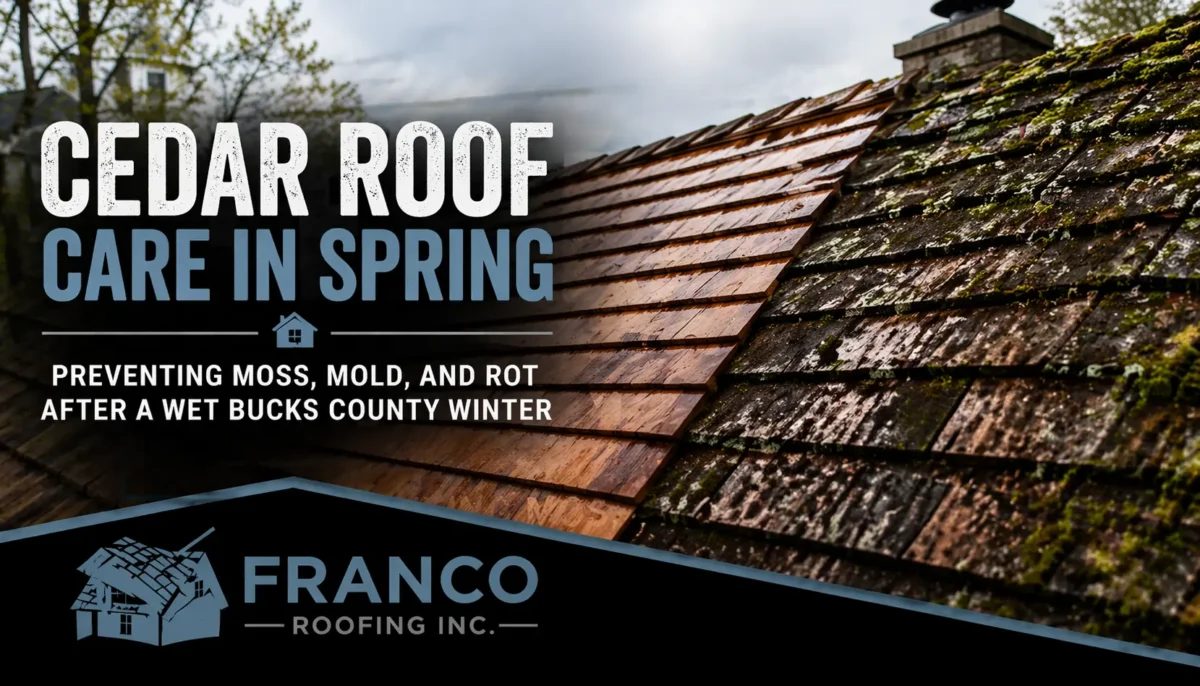
If your home has a cedar shake or cedar shingle roof, you already know what makes it worth the investment: the distinctive texture, the natural beauty, the way it ages into the landscape of a Bucks County property. What you may not know is that spring is the most critical season for that roof’s long-term survival.
A wet Pennsylvania winter creates exactly the conditions that cedar’s primary enemies—moss, mold, algae, and wood rot—need to get a foothold. By the time you can see green growth on the shakes or notice soft, dark patches on the surface, the damage has usually been developing for months underneath. Left unaddressed through a warm, humid summer, what starts as surface growth can accelerate into serious structural decay that shortens the roof’s lifespan by years.
Many homeowners try to handle this themselves—pressure washing the shakes, applying whatever moss killer is available at the hardware store—and end up doing more harm than the moss ever did. Cedar is a forgiving material when treated correctly and an unforgiving one when treated wrong.
Franco Roofing, Inc. has been installing and maintaining cedar shake and cedar shingle roofs across Bucks County and Montgomery County since 1971. Cedar is one of our signature specialties—and spring maintenance is one of the most important services we perform. Here’s what 54 years of cedar expertise tells us every homeowner with a cedar roof needs to know going into spring.
What You’ll Learn
- Why moss, mold, and rot are bigger problems on cedar roofs after wet winters
- The real causes of premature cedar roof deterioration in Pennsylvania
- How to assess your cedar roof’s condition after spring rain
- The right and wrong ways to treat cedar shakes—and what never to do
- Why Bucks County homeowners trust Franco Roofing for cedar roof care
- Frequently asked questions about cedar roof maintenance in Pennsylvania
Why Spring Is the Most Dangerous Season for Cedar Roofs in Bucks County
Cedar shake and cedar shingle roofs are prized for their natural durability and beauty, but they require active maintenance to achieve their full lifespan potential. A well-maintained cedar roof can last 30 to 40 years in Pennsylvania’s climate. A neglected one can begin showing significant deterioration in 10 to 15 years.
The problem is moisture. Cedar is a wood product, and wood exposed to prolonged moisture—especially when that moisture is trapped under debris or in shaded areas—becomes a growing medium for the organisms that destroy it. Bucks County and Montgomery County winters deliver exactly this: weeks of precipitation, leaf and debris accumulation, reduced sunlight due to low sun angles, and freeze-thaw cycles that open micro-cracks in the wood grain.
Warning signs to look for on your cedar roof this spring:
- Green, black, or gray growth visible on shakes (moss, algae, or mold)
- Shakes that appear darker or discolored compared to surrounding areas
- Curling, cupping, or splitting at the edges or faces of individual shakes
- Soft or spongy feel when walking on cedar sections (do not walk cedar unless trained)
- Debris accumulation in valleys and at ridge lines
- Shakes that appear thinner at the exposed edge than they should be (erosion)
- Missing shakes or gaps in the roof plane
The Real Causes of Moss, Mold, and Rot on Pennsylvania Cedar Roofs
Understanding why cedar roofs deteriorate in Pennsylvania’s climate is essential to preventing it. These are the four root causes we see most consistently across Bucks County, Montgomery County, and Western New Jersey.
1. Trapped Moisture from Debris Accumulation
Cedar shakes function best when they dry quickly after rain. The natural oils in cedar wood provide inherent resistance to moisture, but that resistance depends on air circulation and timely drying. When leaves, pine needles, seed pods, and organic debris accumulate in roof valleys, around chimneys, and against ridge lines, they create a moisture-retaining layer that keeps the cedar wet long after rain has stopped.
Bucks County properties—especially those surrounded by mature trees in Doylestown, New Hope, Solebury, and Buckingham—accumulate significant debris loads through fall and winter. By the time spring arrives, some roof sections may have been holding moisture against the wood surface for months. This is the single most common setup for moss and mold establishment we see in our service area.
2. Moss and Algae: Surface Growth That Becomes Structural Damage
Moss is more than an aesthetic problem. Moss plants anchor themselves by growing root-like structures called rhizoids into the surface of the cedar shake. As the moss grows and expands, those rhizoids physically separate the wood fibers, creating pathways for water to penetrate deeper into the shake than it otherwise would. Moss also acts as a sponge, holding moisture against the wood surface continuously—including on dry, sunny days.
Algae is an earlier-stage problem that often precedes moss establishment. The dark streaking visible on cedar roofs throughout shaded areas of Bucks County and Montgomery County is typically algae. Left untreated, algae colonies create the moist, shaded micro-environment that moss then colonizes. Addressing algae before moss takes hold is dramatically easier and less damaging to the cedar than clearing established moss growth.
3. Mold and Fungal Decay Inside the Shake
While moss and algae are surface issues, mold and wood-decaying fungi operate inside the shake itself. Once moisture penetrates the outer surface—through cracks, eroded wood grain, or moss rhizoid channels—fungal spores present in the environment can begin breaking down the wood fibers from within. This is the mechanism of wood rot, and it progresses from the inside out.
By the time a cedar shake looks dark, soft, or crumbly on the surface, internal decay has usually been underway for an extended period. This is why visual inspection from ground level catches late-stage rot but misses the early and mid-stages where intervention is most cost-effective. In our 54 years working on cedar roofs throughout Bucks County, we’ve replaced shakes that appeared surface-intact but were structurally compromised through the full depth of the material.
4. Improper Previous Treatments and Pressure Washing Damage
One of the most common causes of accelerated cedar roof deterioration we encounter is a previous DIY treatment or low-quality contractor work. Pressure washing cedar shakes—even at reduced pressure—strips the protective outer grain layer that naturally sheds water and resists biological growth. Harsh bleach-based moss killers applied at incorrect dilutions can desiccate and crack cedar. Oil treatments applied before the wood is fully dry trap moisture inside the shake rather than repelling it from the outside. Each of these mistakes shortens cedar lifespan and is not reversible.
How to Assess Your Cedar Roof’s Condition After Spring Rain
A meaningful cedar roof assessment after winter requires more than a glance from the driveway. Here’s how Bucks County and Montgomery County homeowners can evaluate the situation before deciding on next steps.
- Ground-level visual inspection. Use binoculars to get a clear view of the full roof surface. Look for any visible green, gray, or black growth on the shakes. Note areas of discoloration, particularly on north-facing sections and under tree canopy, which stay shaded and wet longer. These are the highest-risk zones for moss and algae.
- Check valleys and low points. Roof valleys—where two roof planes meet—collect the most debris and stay wet the longest. Look for debris accumulation, discoloration, and any growth concentrated in these areas. Valley deterioration on cedar often precedes damage on the main roof planes.
- Inspect gutters for cedar debris. Fragments of cedar material in the gutters indicate shakes that are actively eroding or splitting. This is a sign that individual shakes are breaking down and should be evaluated on the roof.
- Check the attic after rain. As with any roofing system, the attic provides early evidence of water infiltration before ceiling damage is visible. Look for moisture staining or wet spots on the decking in the 24 hours following a rain event.
- Note the age and maintenance history. If your cedar roof is 10 or more years old and has not received a professional cleaning and treatment within the last 3 to 5 years, a spring inspection by a cedar specialist is warranted regardless of what you can see from the ground.
Schedule a professional inspection immediately if:
- Visible moss or black algae streaking covers more than a small isolated area
- You can see shakes that are curling, cracked, or missing entirely
- There are any signs of interior water infiltration
- The roof has not been professionally serviced in 5 or more years
The Right Way to Treat and Protect a Cedar Roof in Spring
What You Can Do Without Damaging the Cedar
There are a few safe maintenance actions homeowners can take from ground level or on flat accessible areas. Keeping gutters clear of debris removes a major moisture source. Trimming back overhanging tree branches increases sunlight exposure and air circulation on the roof surface—the two factors most effective at naturally discouraging moss and algae growth. Keeping the area around downspouts clear ensures drainage doesn’t back up against the structure.
What to avoid: do not use a pressure washer on cedar shakes under any circumstances. Do not apply hardware store moss killers without knowing the dilution ratio and the specific product’s compatibility with cedar. Do not apply any sealant or oil treatment to shakes that are currently wet or showing active biological growth. All of these common DIY approaches cause damage that is permanent and cumulative.
Professional Cedar Roof Cleaning and Treatment
A proper professional cedar roof service from Franco Roofing, Inc. involves several coordinated steps. We begin with a thorough hands-on inspection of the full roof surface, including valleys, ridge lines, flashing points, and individual shake condition. We identify shakes that need replacement, areas of active biological growth, and any structural concerns with the decking beneath.
Cleaning is done with low-pressure soft washing using a biocide solution formulated specifically for cedar and compatible with Pennsylvania’s watershed environment. This removes moss, algae, and surface mold without stripping the wood grain or forcing moisture deeper into the shakes. After cleaning and a proper drying period, we apply a cedar preservative treatment that restores natural oils, improves water repellency, and leaves a protective barrier that discourages future biological growth.
Individual shake replacement is handled as part of the same service when needed—matching the existing material in profile and grade so repairs integrate with the existing roof rather than standing out. We source cedar from quality suppliers and have the relationships to match existing grades and profiles on older Bucks County homes, including historic properties in Doylestown, New Hope, and Solebury where visual consistency matters.
Maintenance Scheduling: The 3-to-5-Year Window
The most important thing cedar roof owners in Bucks County and Montgomery County can do is maintain a professional service schedule. In Pennsylvania’s climate—with its combination of heavy precipitation, humidity, and organic debris from mature tree canopy—cedar roofs benefit from professional cleaning and treatment every 3 to 5 years. Homeowners who maintain this schedule consistently reach the full 30-to-40-year lifespan. Those who wait until visible damage prompts a call are typically dealing with partial replacement costs well before the roof reaches its potential.
Why Bucks County Homeowners Trust Franco Roofing for Cedar Roof Care
Cedar shake and cedar shingle roofing is one of Franco Roofing’s signature specialties. That’s not a marketing phrase—it reflects more than 50 years of hands-on work with cedar roofs across Bucks County, Montgomery County, and into Western New Jersey. We have installed cedar roofs on historic homes throughout Doylestown’s historic district, New Hope, Perkasie, Buckingham, Solebury, and dozens of communities in between. We know how cedar performs in Pennsylvania’s specific climate and how it fails when it’s not maintained correctly.
Michael Procaccino has 25+ years of direct experience with cedar roofing systems, continuing the expertise his father Franco established when the company was founded in 1971. When we inspect a cedar roof, we’re not running through a checklist—we’re evaluating material condition the way someone who has worked with cedar for decades evaluates it. We can tell the difference between surface discoloration that’s cosmetic and soft grain that signals internal decay. That distinction matters when you’re deciding between a cleaning and a replacement.
Franco Roofing is fully licensed in Pennsylvania (PA #PA018056) and New Jersey (NJ #13VH07058000), carries a $2,000,000 general liability policy and workers’ compensation coverage, and backs all installation and restoration work with our 10-year workmanship warranty. 80% of our business comes from referrals. We’ve built that by being straightforward about what a cedar roof needs—and what it doesn’t.
Frequently Asked Questions
How do I know if the moss on my cedar roof is causing real damage or is just cosmetic?
Any established moss growth on cedar shakes is causing damage—it’s never purely cosmetic. Moss anchors into the wood surface with root-like structures that physically separate wood fibers and create water infiltration channels. The question is how far the damage has progressed. Surface moss caught early is far easier and less expensive to address than moss that has been established for multiple seasons. A professional inspection will determine the extent and what treatment is appropriate.
Can I pressure wash my cedar shake roof to remove moss and algae?
No. Pressure washing cedar shakes—even at low settings—strips the protective outer grain layer and accelerates the deterioration it’s meant to fix. Cedar should be cleaned using low-pressure soft washing with a biocide solution specifically formulated for wood roofing. This removes biological growth without damaging the shake surface. Pressure washing is one of the most common causes of premature cedar roof failure we see on Bucks County and Montgomery County properties.
How often should a cedar shake roof in Bucks County be professionally cleaned and treated?
Every 3 to 5 years is the standard recommendation for Pennsylvania’s climate. Properties with significant tree canopy overhead, north-facing sections, or shaded roof areas may benefit from attention closer to the 3-year mark. Consistent maintenance on this schedule is the single most effective way to maximize cedar roof lifespan and avoid costly partial replacements.
How much does cedar shake roof cleaning and treatment cost in Bucks County?
Cost depends on the size of the roof, the extent of biological growth, the number of shakes requiring replacement, and the pitch and accessibility of the roof plane. Franco Roofing provides free, no-obligation estimates for all cedar roof services throughout Bucks County and Montgomery County. We provide detailed written pricing covering all work before anything begins.
What is the lifespan of a cedar shake roof in Pennsylvania?
A properly installed and maintained cedar shake roof can last 30 to 40 years in Pennsylvania’s climate. Cedar shingle roofs (thinner, sawn material) typically run 20 to 30 years. The key variable is maintenance consistency. Cedar roofs that receive professional cleaning and treatment on schedule routinely hit the upper end of these ranges. Those that go without maintenance often require significant partial replacement or full replacement in 15 to 20 years.
Can damaged cedar shakes be replaced without replacing the whole roof?
Yes, in most cases. Individual shake replacement is a standard part of cedar roof maintenance. As long as the underlying decking is structurally sound and the majority of the existing shakes are in acceptable condition, selective replacement of damaged material is cost-effective and extends overall roof life. Franco Roofing sources replacement cedar that matches the existing roof in grade and profile, maintaining the visual consistency that matters on Bucks County historic and high-end properties.
Do you service cedar roofs throughout Montgomery County and Western New Jersey?
Yes. Franco Roofing provides cedar shake and cedar shingle roof inspection, cleaning, treatment, and replacement services across Bucks County, Montgomery County, and Western New Jersey including Hunterdon and Mercer Counties. Communities include Doylestown, New Hope, Newtown, Perkasie, Warminster, Horsham, Lansdale, Willow Grove, Princeton, Lambertville, and all surrounding areas. Call (215) 345-1828 to confirm service to your address.
Next Steps: Spring Is the Right Time to Address Cedar Roof Issues
Cedar roofs reward homeowners who stay ahead of maintenance and penalize those who wait. Spring—before heat and humidity accelerate biological growth through summer—is the ideal window to assess condition, address any moss or algae present, treat the wood surface, and replace any shakes that have reached the end of their useful life.
Key takeaways:
- Moss is never purely cosmetic—it physically damages cedar shakes
- Pressure washing is one of the most common causes of premature cedar failure
- Professional cleaning and treatment every 3 to 5 years is the most effective long-term strategy
- Catching damage in spring is consistently less expensive than addressing the same issues in summer or fall
Contact Franco Roofing, Inc. for a free cedar roof inspection and estimate:
- Doylestown: (215) 345-1828
- Newtown: (215) 860-1550
- Pipersville: (215) 766-0266
- Email: francoroofinginc@verizon.net
- Website: francoroofinginc.com
We respond within 24 hours and can typically schedule consultations within one week. Serving Bucks County, Montgomery County, and Western New Jersey since 1971.