
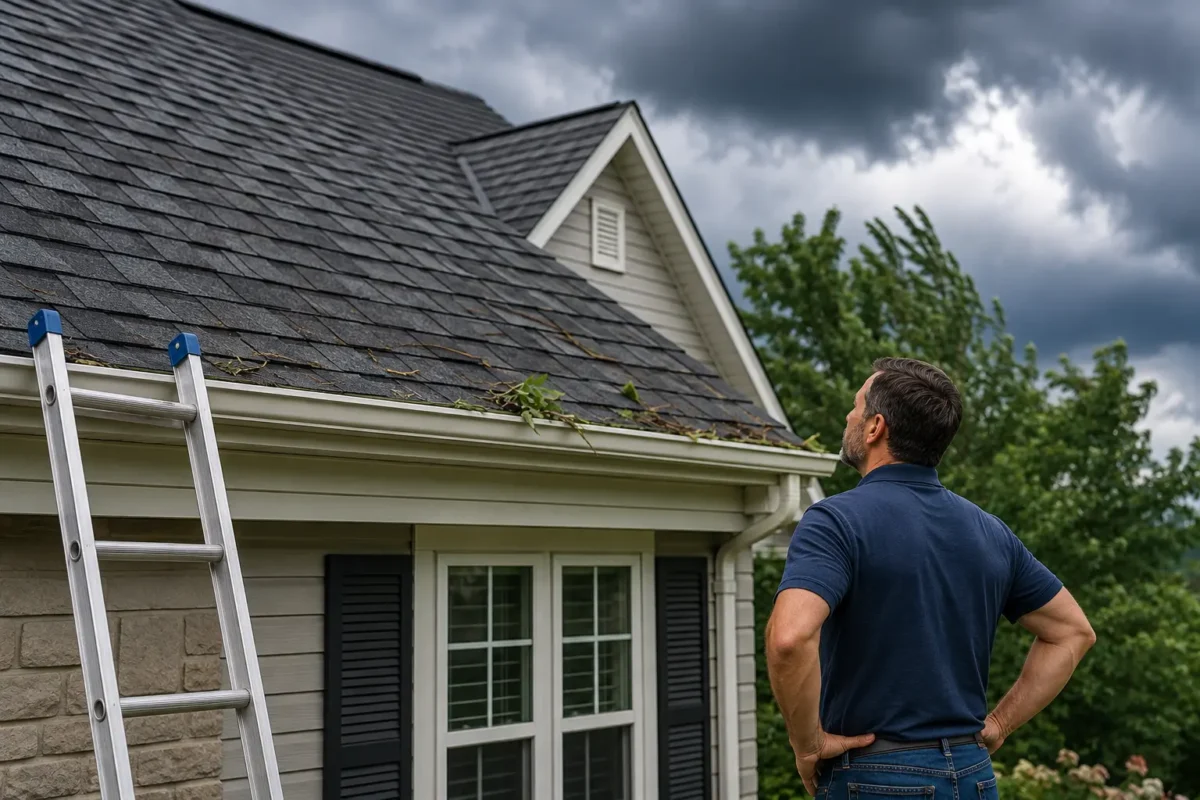
Pennsylvania is not a coastal state, and most Bucks County and Montgomery County homeowners don’t think of themselves as being in a hurricane zone. But the history of Atlantic storms tells a different story. Tropical systems that make landfall in the Carolinas or Virginia regularly track northward through the mid-Atlantic, delivering sustained winds of 40 to 60 mph and rainfall totals of 3 to 6 inches across southeastern Pennsylvania within 24 to 36 hours. Hurricanes Ida, Isaias, Sandy, Floyd, and Irene all produced significant roof damage throughout Bucks County and Montgomery County—flooding, wind uplift, fallen trees, and the delayed damage that follows when a compromised roof meets sustained heavy rain.
The peak of the Atlantic hurricane season runs from August through October. Late summer—August and September—is the window when Bucks County and Montgomery County homeowners are most likely to face a significant tropical weather event. It is also the window when roof vulnerabilities that developed over winter and spring are most consequential. A flashing that has been slowly separating since April, a handful of shingles with nail-pop issues, a section of drip edge that isn’t fully seated—none of these produces a crisis during ordinary summer rain. Add 50 mph sustained wind and three inches of rainfall in six hours, and each becomes a serious problem.
Franco Roofing, Inc. has been responding to storm damage throughout Bucks County and Montgomery County since 1971. We have inspected and repaired roofing systems after every major storm event that has hit this region across five decades. What those 54 years have taught us is that the damage a storm causes is often less about the storm itself than about the pre-existing condition of the roof it hits. A well-maintained roof in good repair handles the same event that severely damages a compromised one. Here is the late-summer preparation guide that gives Pennsylvania homeowners the best chance of getting through storm season without a crisis.
What You’ll Learn
- Why Pennsylvania homeowners need to take hurricane season seriously for their roofs
- The specific roof vulnerabilities that tropical systems exploit in Bucks County and Montgomery County
- How to inspect your roof before storm season peaks
- The late-summer prep checklist that matters—and what does and doesn’t make a difference
- What to do immediately after a tropical storm or hurricane-related event
- Why Bucks County and Montgomery County homeowners trust Franco Roofing for storm response
- Frequently asked questions about hurricane and storm prep for Pennsylvania roofs
The Problem: What Tropical Weather Actually Does to Pennsylvania Roofs
Tropical weather systems affect Pennsylvania roofs through three distinct mechanisms that often act simultaneously: sustained wind, wind-driven rain, and sustained rainfall totaling. Understanding each helps homeowners assess where their specific roof is most vulnerable.
Sustained wind—even at 40 to 50 mph, well below hurricane classification—generates uplift forces on roofing systems that standard residential construction is engineered to resist, but only when in good repair. Shingles that are lifting at the edges, poorly seated at the nail line, or stiffened by age become projectiles or points of water entry under sustained uplift. Flashing that has been slowly working loose becomes fully separated. Ridge caps that were marginal become missing.
Wind-driven rain—rain moving horizontally rather than falling vertically—enters roofing systems through pathways that standard rainfall never reaches. Gaps at flashing transitions, the underside of lifted shingles, and any unsealed roof penetration become entry points for water moving laterally at wind speed. A flashing detail that sheds vertical rainfall perfectly can fail completely under horizontal wind-driven rain.
Roof components most vulnerable during tropical storm events in southeastern Pennsylvania:
- Shingles at the perimeter, ridge, and hip—highest uplift exposure
- Step and counter flashing at chimney bases, dormers, and skylights
- Drip edge at eaves and rakes—first defense against wind-driven water at the roof perimeter
- Ridge caps—highest point on the roof and highest wind exposure
- Valley flashing where two roof planes intersect and water concentrates
- Gutters and downspouts under high-volume rainfall load
- Roof penetrations: vents, pipes, satellite dish mounts, HVAC equipment
Why Some Roofs Fail in Storms That Others Survive
After inspecting and repairing roofing systems following major storm events across Bucks County and Montgomery County for more than 50 years, we have a clear picture of what determines whether a roof survives a tropical weather event. It is almost never a single catastrophic failure—it is the accumulation of deferred maintenance issues that the storm exploits simultaneously.
1. Shingle Adhesion Failure from Age and Heat Exposure
Asphalt shingles are designed with a self-sealing adhesive strip that bonds each course to the one above it when warmed by sun after installation. As shingles age—particularly in the 15-to-25-year range common on the Bucks County and Montgomery County housing stock that was re-roofed in the early 2000s—that adhesive bond weakens. Summer heat cycles accelerate the process. A shingle that looks intact from the ground may have lost its adhesive seal and be held in place primarily by its fasteners rather than the bond. Under sustained wind uplift, fastener-only shingles lift at the tab, tear at the nail line, or pull free entirely. This is the most common mode of wind damage on residential roofs in our market after tropical weather events.
2. Flashing That Has Been Working Loose Over Seasons
As discussed in our spring and summer maintenance articles, flashing failure is incremental. The sealant cracks in freeze-thaw cycles, the metal fatigues at bends over years of thermal expansion and contraction, and the result is flashing that sheds vertical rain adequately but has lost its ability to handle the horizontal water load that wind-driven rain imposes. On homes across Doylestown, New Hope, Horsham, and Lansdale that we inspect after tropical events, chimney and dormer flashing is the most consistently identified source of water intrusion. The storm didn’t fail the flashing—it revealed that the flashing had already failed.
3. Gutters Overwhelmed by Tropical Rainfall Volume
A tropical system delivering three to five inches of rainfall in six to eight hours generates water volume that overwhelms gutters in two ways: through sheer flow rate exceeding the gutter system’s capacity, and through debris accumulation that restricts flow during the storm. Gutters that back up during extreme rainfall events push water against the fascia and roofline rather than directing it away from the structure. This produces water intrusion at the eave line—behind the drip edge, under the first shingle course—that ordinary rain never creates. Gutters that are clean, properly sloped, adequately sized, and fully secured to the fascia handle this load significantly better than those that are partially blocked or pulling away from the structure.
4. Tree Proximity and Impact Risk
Bucks County and Montgomery County’s residential character includes significant mature tree canopy—a feature that defines the look of communities like New Hope, Doylestown, Ambler, and Blue Bell, but that also represents the primary source of non-wind-damage roof events during tropical storms. Branches that are dead, structurally compromised, or simply overhanging the roof become projectiles and impact loads under 50-plus mph wind gusts. The single most effective storm preparation step for homes with significant tree canopy is professional evaluation and removal of dead or compromised branches overhanging the roof perimeter before storm season peaks.
5. Deferred Maintenance Creating Compounding Vulnerability
The most consistent finding after significant storm events on Bucks County and Montgomery County properties is that the homes with the most damage had the most deferred maintenance. A roof with two or three isolated vulnerability points—a lifted flashing, a section of nail-popped shingles, a partially blocked gutter—may handle each in isolation. Under a tropical storm event, all three are stressed simultaneously, and the combination produces interior damage that none of them would have caused alone. Annual maintenance inspections are not a luxury for high-end homes—they are the mechanism that prevents this compounding effect.
How to Inspect Your Roof Before Storm Season Peaks
A pre-storm inspection should be completed by late August—before the historically most active storm weeks in September. Here is what to look for and how to prioritize what you find.
- Ground-level shingle assessment. With binoculars, examine the full roof surface from multiple ground positions. Look for shingles that are lifting at the tab edges, showing nail pop (a small bump or dimple in the shingle surface), cracked across the face, or with visible gaps along the seam lines. Pay particular attention to the perimeter, ridge, and hip—the highest wind-exposure areas.
- Flashing inspection at all transitions. Look at every location where the roof meets a vertical surface: chimney bases, dormer walls, skylight frames, and any wall-to-roof transition. Flashing that is lifted at any edge, that shows visible separation from the adjacent material, or that has a sealant line that appears cracked and shrinking is a storm vulnerability that should be addressed before August ends.
- Ridge and hip cap condition. Ridge caps are the highest-exposure component on the roof. Look for caps that are lifting, cracked, or showing the alignment irregularity of caps that have shifted from their original position. A ridge cap that is marginal in July will often be gone by October.
- Gutter condition and drainage. Clean gutters completely before August ends. Check that all sections are properly sloped toward downspout outlets—no low spots where water pools. Confirm that gutters are fully secured to the fascia with no sections pulling away. Check downspout extensions to confirm they direct water at least four feet away from the foundation.
- Tree canopy over and adjacent to the roof. Walk the perimeter and look up at overhanging branches. Note any that appear dead (no leaf coverage, brittle bark, visible decay), are directly contacting the roof surface, or are large enough that a fall would reach the structure. These warrant evaluation by a certified arborist before storm season peaks.
- Attic inspection after any recent rain. Within 24 hours of a rainfall event, check the attic for any new moisture staining, dripping, or wet spots on insulation. Any new evidence of water entry is a roof vulnerability that needs to be resolved before a tropical event delivers five times the rainfall load.
- Commission a professional pre-storm inspection. A professional inspection by a qualified roofing contractor provides assessment of the full roofing system—including components not visible from ground level—and a prioritized list of what to address before storm season. For homeowners whose roofs are more than 12 years old or haven’t had a professional inspection in two or more years, a pre-storm professional assessment is the most valuable preparation investment available.
The Late-Summer Prep Actions That Actually Matter
Not every storm preparation action is equally valuable. Here is a clear-eyed assessment of what makes a meaningful difference for Bucks County and Montgomery County roofs, in priority order.
High Impact: Address Before Storm Season Peaks
- Resolve any identified flashing vulnerabilities. Flashing repair or reseal at chimneys, dormers, and skylights is high-value storm preparation. The cost is modest; the exposure from unaddressed flashing during a tropical event is significant.
- Replace lifted, cracked, or adhesion-failed shingles. Individual shingle replacement at areas of identified vulnerability eliminates the primary wind uplift entry points before storm season.
- Clean and secure gutters completely. A clean, properly fastened gutter system handles tropical rainfall volume far better than a partially blocked one. This is a homeowner-accessible task with direct storm protection value.
- Remove or evaluate dead and compromised overhanging branches. Tree impact is the leading cause of severe storm damage on individual Bucks County and Montgomery County properties. Professional arborist evaluation of concerning trees before storm season is not optional for homes with significant canopy overhead.
- Secure or remove roof-mounted equipment. Satellite dishes, solar panel mounting hardware, and HVAC equipment on or adjacent to the roof should be confirmed as properly secured. Loose equipment becomes a penetration risk under sustained wind.
Moderate Impact: Good Practice, Lower Urgency
- Photograph your roof condition before storm season. Date-stamped pre-storm photographs of your roof’s current condition establish a baseline that supports insurance claims if damage occurs. This takes 20 minutes and costs nothing.
- Locate and review your homeowner’s insurance policy. Know your coverage limits, deductible, and what documentation your insurer requires for storm damage claims before you need this information under post-storm time pressure.
- Identify where you would put temporary protection. Know in advance where tarps or plywood would need to go on your property if emergency temporary protection is needed. Having materials on hand is not necessary, but having a mental plan shortens the response time significantly.
What Not to Do: Low or Negative Value Preparations
- Do not apply roofing sealant or caulk to areas without diagnosis. Caulk applied over a flashing that needs replacement creates a temporary seal that masks the problem and may complicate proper repair.
- Do not attempt to access your roof for inspection or repair without proper equipment and experience. Fall risk on a residential roof is significant. Ground-level assessment plus professional inspection is the right approach.
- Do not replace a roof in the week before a forecast storm event. A roof mid-installation during a storm is more vulnerable than one with existing shingles, even imperfect ones. Storm prep is a pre-season activity, not a last-minute one.
What to Do Immediately After a Tropical Storm or Hurricane Event
If a tropical system does produce damage to your Bucks County or Montgomery County property, the actions you take in the first 24 to 48 hours determine both the extent of secondary damage and the outcome of your insurance claim. A full treatment of post-storm documentation and claim procedure is covered in our storm damage insurance article, but the immediate priority sequence is straightforward.
- Ensure personal safety before approaching the structure. Do not approach a home with downed power lines, visible structural damage, or a tree that has impacted the structure until emergency services have assessed and cleared it.
- Document everything immediately. Photograph all exterior damage, interior staining, and any fallen material—including shingles on the ground—with date-stamped images before any cleanup or repair activity. Weather records from the storm event should be captured from a local weather service or NOAA’s Storm Events Database.
- Check the attic within 24 hours. Look for any new water staining, active dripping, or wet insulation. Mark the perimeter of any new ceiling stains with a pencil to track expansion.
- Arrange temporary protection if there is active water intrusion. If there is active leakage, temporary tarping or emergency protective measures are appropriate. Document protective measures before and after. Do not make permanent repairs until your insurer has assessed the damage.
- Call Franco Roofing. We provide 24/7 emergency response for storm damage throughout Bucks County and Montgomery County. A professional post-storm inspection from a contractor you already have a relationship with—rather than one solicited door-to-door after the storm—is the most reliable path to accurate damage assessment and honest repair scope.
- File your insurance claim promptly. Contact your insurer with your documentation package as soon as your assessment is complete. Prompt reporting is required under most Pennsylvania homeowner policies, and storm-specific damage evidence is clearest in the days immediately following an event.
Why Bucks County and Montgomery County Homeowners Trust Franco Roofing for Storm Response
Storm response roofing is a specific competency that goes beyond standard installation work. It requires the ability to assess damage accurately under post-storm conditions, to prioritize emergency protective measures correctly, to provide documentation that supports insurance claims, and to execute repairs on an urgent timeline without compromising quality. Franco Roofing has been doing this work in Bucks County and Montgomery County for more than 54 years—through every significant storm event that has hit this region across five decades.
We are not storm chasers who arrive after a major event and leave when the work dries up. Our business is built on referrals from homeowners in Doylestown, New Hope, Horsham, Lansdale, Blue Bell, and throughout our service area—people who called us after a storm, received an honest assessment and quality repair, and have been our customers ever since. 80% of our work comes from that referral base. That model depends entirely on doing the job right, documenting it correctly, and standing behind it with our 10-year workmanship warranty.
Franco Roofing is fully licensed in Pennsylvania (PA #PA018056) and New Jersey (NJ #13VH07058000), carries a $2,000,000 general liability policy and workers’ compensation, and provides 24/7 emergency response for storm damage throughout our service area. Michael Procaccino and our team of 10 specialized installers—employees, not subcontractors—bring the same expertise to emergency work that they bring to planned replacements.
Frequently Asked Questions
Do hurricanes actually affect Bucks County and Montgomery County roofs?
Yes. Tropical systems that make landfall in the Carolinas or Virginia routinely track northward through southeastern Pennsylvania, delivering sustained winds of 40 to 60 mph and rainfall totals of 3 to 6 inches or more. Hurricanes Ida, Isaias, Sandy, Floyd, and Irene all produced significant roof damage in Bucks County and Montgomery County. The peak risk window is August through October.
When should I have my roof inspected before hurricane season?
By late August, before the historically most active storm weeks in September. A pre-storm professional inspection identifies vulnerabilities—flashing issues, adhesion-failed shingles, compromised ridge caps—that can be addressed before a storm event. Addressing these issues in August is far less stressful and less expensive than addressing them as emergency repairs after a storm.
What wind speed is my roof rated to handle?
Most architectural asphalt shingles installed in the past 15 years are rated to 110 to 130 mph when installed to manufacturer specifications. However, that rating assumes properly functioning adhesive bond between courses and correct fastener pattern. Shingles that have lost their self-sealing adhesive bond with age—common on roofs in the 15-to-25-year range—have significantly reduced effective wind resistance regardless of their original rating. Older 3-tab shingles were typically rated to 60 to 70 mph. Premium materials—slate, standing seam metal—have significantly higher effective wind resistance when properly installed.
How much does pre-storm roof preparation cost?
Cost depends on what the inspection finds. A professional pre-storm inspection from Franco Roofing is free. If individual shingle replacement, flashing reseal, and gutter cleaning are the identified needs, the cost is typically in the hundreds to low thousands of dollars for most properties. This compares favorably to the cost of emergency repairs after storm damage—which are invariably more expensive, harder to schedule, and complicated by insurance claim processes.
My roof is only 8 years old. Do I still need storm prep?
Newer roofs in good condition are generally well-positioned for storm season, but they are not immune to the specific vulnerabilities that tropical events exploit. Flashing can fail on a 2-year-old roof if it was installed incorrectly or has experienced unusual thermal stress. Gutter condition is independent of roof age. Tree proximity is independent of roof age. A ground-level pre-storm assessment is appropriate regardless of the roof’s age; a professional inspection every two to three years remains the right cadence even for newer installations.
Does Franco Roofing offer emergency service after storms?
Yes. Franco Roofing provides 24/7 emergency response for storm damage throughout Bucks County, Montgomery County, and Western New Jersey. If your property sustains damage during a tropical weather event, call (215) 345-1828. We assess damage, provide temporary protective measures when needed, document findings for insurance purposes, and execute repairs on an urgent timeline.
What roofing material performs best in high-wind events?
Natural slate and standing seam metal are among the highest wind-resistant roofing materials when properly installed—slate’s mass and mechanical fastening, and metal’s continuous seam profile, provide superior resistance to uplift compared to adhered asphalt shingles. For homeowners considering replacement, these materials provide meaningful storm performance advantages in addition to their other benefits. High-quality synthetic slate composites with Class 4 impact ratings also perform well under wind and hail conditions common during tropical weather events in Pennsylvania.
Next Steps: August Is the Right Month to Act
The best storm preparation is the kind that happens before the storm is in the forecast. A pre-storm inspection and any identified repairs completed in August give your roof the best possible position heading into the September-October peak of Atlantic hurricane season. The cost of preparation is consistently a fraction of the cost of post-storm emergency response.
Key takeaways:
- Tropical systems regularly deliver damaging wind and rainfall to Bucks County and Montgomery County—this is not a coastal-only risk
- Storm damage is usually the product of pre-existing vulnerabilities, not random bad luck—maintenance determines outcomes
- Flashing repair, perimeter shingle replacement, and clean secured gutters are the highest-value pre-storm investments
- Dead or compromised overhanging trees are the leading cause of severe individual property damage in storm events
Contact Franco Roofing, Inc. for a free pre-storm inspection and estimate:
- Doylestown: (215) 345-1828
- Newtown: (215) 860-1550
- Pipersville: (215) 766-0266
- Email: francoroofinginc@verizon.net
- Website: francoroofinginc.com
Emergency service is available 24/7 throughout Bucks County, Montgomery County, and Western New Jersey. We respond within 24 hours for non-emergency inquiries and can typically schedule inspections within one week.