
Discovering a roof leak during winter weather creates immediate stress for any homeowner, but understanding how to identify and address winter roof leak repair in Bucks County can minimize damage and prevent small problems from becoming structural disasters. Pennsylvania’s harsh winter conditions—heavy snowfall, ice dam formation, freeze-thaw cycles, and severe storms—create unique challenges that cause roof leaks even in otherwise sound roofing systems. After providing emergency roofing services throughout Bucks County and Montgomery County for over 50 years, Franco Roofing has helped thousands of homeowners navigate winter roof emergencies, and we’ve learned that quick identification and proper response make the difference between minor repairs and major reconstruction.
Winter roof leaks differ fundamentally from warm-weather leaks because the underlying causes involve ice, snow, and freezing temperatures rather than simple water infiltration. A roof that performed perfectly all summer can suddenly develop serious leaks when ice dams form, when heavy snow loads stress structural components, or when freeze-thaw cycles exploit small weaknesses. Understanding winter roof leak repair in Bucks County requires recognizing these seasonal challenges and knowing when temporary measures suffice versus when emergency roofing services become necessary to protect your home and family.
This comprehensive guide covers everything Bucks County homeowners need to know about identifying winter roof leaks, implementing immediate damage control, understanding when professional intervention is essential, and preventing future winter roofing emergencies. Drawing on Franco Roofing’s five decades serving Pennsylvania properties through countless winter storms, this article provides the practical knowledge that protects homes and prevents the devastating damage that untreated winter leaks cause.
Table of Contents
- Common Causes of Winter Roof Leaks
- How to Spot Winter Roof Leaks Early
- Immediate Steps When You Discover a Leak
- Ice Dam Removal Safety and Techniques
- Snow Damage Repair Priorities
- When to Call Emergency Roofing Services
- Temporary vs. Permanent Repairs
- Preventing Future Winter Roof Leaks
- Frequently Asked Questions
- Expert Winter Roofing Insights
Common Causes of Winter Roof Leaks
Understanding what causes winter roof leaks helps homeowners recognize problems early and take appropriate action. Winter roof leak repair in Bucks County addresses several distinct causes unique to cold-weather conditions.
Ice Dam Formation
Ice dams represent the most common cause of winter roof leaks throughout Bucks County. These thick ice ridges form at roof edges when heat escaping through your roof melts snow on upper roof sections. The melted water runs down toward gutters but refreezes when it reaches colder eaves, creating an ice barrier. As this cycle repeats, the ice dam grows larger, eventually backing water up under shingles where it infiltrates into attic spaces, insulation, ceilings, and walls.
What makes ice dams particularly problematic is that they exploit roofing systems designed for downward water flow, not upward water pressure. Shingles overlap to shed water running down your roof but provide minimal protection against water forced upward by ice dams. Even quality roofing with proper installation can leak when ice dams form, which is why prevention through adequate attic insulation and ventilation is so critical.
In our experience serving Doylestown, Newtown, Perkasie, and surrounding communities, ice dam leaks typically appear first in rooms along exterior walls, often near roof eaves. Homeowners notice water stains on ceilings, water running down interior walls, or actual dripping during warmer periods when trapped water behind ice dams melts and finds entry points into living spaces.
Heavy Snow Accumulation
Bucks County winters regularly bring heavy snowfalls that create significant roof loads. While properly built roofs handle typical snow accumulation, exceptionally heavy storms or multiple storms without melting periods between them can stress roofing systems. Snow weight can cause slight roof deflection that opens seams in flashing, separates roof valleys, or creates gaps where different roof sections meet.
Wet, heavy spring snow causes more stress than light, fluffy snow—one foot of wet snow weighs as much as three feet of dry powder snow. When heavy snow combines with ice layers from previous storms, total roof loads can approach or exceed design limits, particularly on older homes built before current building codes. This stress manifests as leaks at structural weak points—valley seams, around chimneys and skylights, and where roof planes intersect.
Freeze-Thaw Cycle Damage
Pennsylvania’s winter temperatures regularly fluctuate above and below freezing, creating destructive freeze-thaw cycles. Water that enters small cracks, gaps in flashing, or minor shingle damage during warmer periods freezes when temperatures drop. Freezing water expands with tremendous force, widening cracks and separating materials. When temperatures rise again, more water enters the now-larger openings, and the cycle repeats, progressively worsening damage throughout winter.
This freeze-thaw action affects every roofing component. Flashing that was perfectly sealed in fall can develop leaks by mid-winter as expansion and contraction separate it from adjoining surfaces. Shingles with minor edge curling in autumn may have significant cracks by February. Even properly installed roofing gradually deteriorates under freeze-thaw stress, which is why winter roof leak repair in Bucks County often addresses problems that didn’t exist before winter began.
Wind-Driven Rain and Snow
Winter storms in southeastern Pennsylvania frequently combine heavy precipitation with strong winds—nor’easters that bring sustained 40-50 mph winds with gusts exceeding 60 mph. These winds drive rain and snow sideways and even upward, forcing moisture into areas that normally stay dry. Wind-driven precipitation can penetrate under shingles, through soffit vents, around chimneys, and through any small gaps in your roof’s weather barrier.
The combination of wind and freezing temperatures is particularly destructive. Wind-blown snow packs into every crevice and gap, melting slightly from escaping heat, then refreezing and expanding. This process forces moisture deep into roofing layers where it causes damage far beyond what normal rain exposure creates.
Condensation Problems
Winter condensation causes leaks that homeowners often mistake for roof damage. When warm, moist air from your living space reaches cold attic surfaces, it condenses into water droplets. This condensation can accumulate on roof decking, rafters, and insulation, eventually dripping onto ceilings below and creating water stains identical to those from actual roof leaks.
Condensation problems intensify during extremely cold weather when temperature differentials between living spaces and attics become most dramatic. Homes with inadequate attic ventilation or air sealing issues experience the worst condensation leaks. While not technically roof leaks, condensation problems require addressing as urgently as actual leaks because they cause identical damage—saturated insulation, mold growth, and structural wood deterioration.
How to Spot Winter Roof Leaks Early
Early detection of winter roof leaks minimizes damage and repair costs. Recognizing the warning signs allows homeowners to take action before small problems become major emergencies requiring extensive winter roof leak repair in Bucks County.
Interior Warning Signs
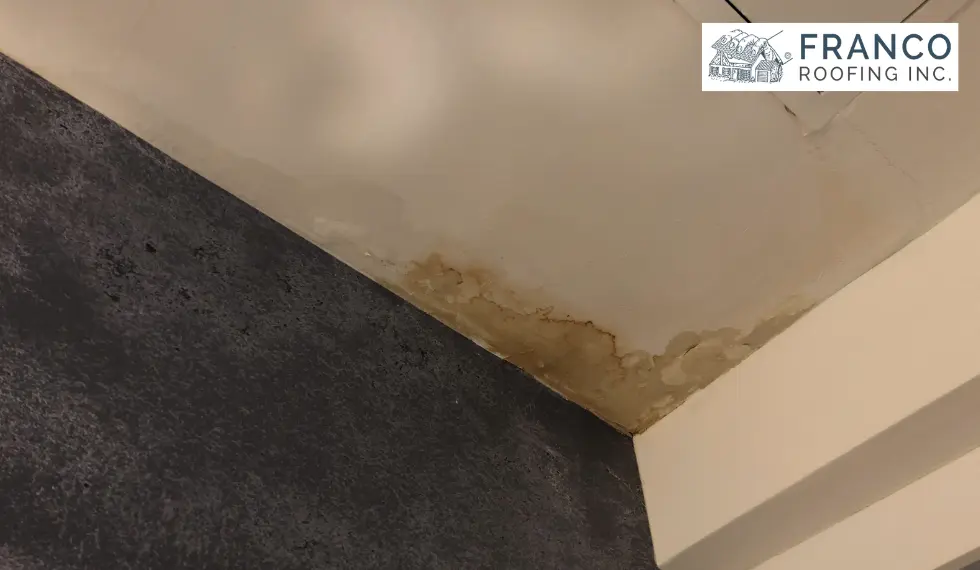
The most obvious indication of roof leaks appears inside your home. Water stains on ceilings typically show as brown or yellowish discoloration that may spread over time. These stains often appear first near exterior walls, in corners, or around light fixtures where water follows electrical wiring paths. Check ceilings in upper-floor rooms, particularly those directly under the roof, and in attic spaces if your home has accessible attic areas.
Wall staining near the ceiling line suggests water running down from roof entry points. Peeling paint or bubbling wallpaper on upper portions of exterior walls indicates moisture problems that may originate from roof leaks. In extreme cases, you’ll see actual water dripping or running down walls during active leaks—this demands immediate attention and often requires emergency roofing services.
Don’t ignore subtle signs like musty odors in upper-floor rooms or closets, which suggest hidden moisture problems. Mold or mildew growth on walls or ceilings indicates ongoing moisture issues even if you haven’t seen obvious water stains. Sagging ceiling sections suggest water has saturated drywall or plaster, compromising structural integrity and requiring immediate professional assessment.
Attic Inspection Signs
Regular attic inspections during winter reveal problems before they cause visible interior damage. Using a flashlight, look for water stains on roof decking (the wooden boards under your shingles), dark spots indicating moisture, or actual dripping during or shortly after storms. Check rafters and support beams for water staining, which appears as darkened wood or white mineral deposits where water has evaporated.
Inspect insulation for dampness or compression—wet insulation loses its insulating value and may feel heavy or appear matted down. Look for daylight penetrating through roof decking, which indicates holes or gaps requiring immediate repair. Ice formation or heavy frost on attic surfaces during extremely cold weather suggests ventilation problems that contribute to ice dam formation and condensation issues.
Pay special attention to areas around chimneys, vent pipes, and where different roof sections meet. These transitional areas are most vulnerable to leaks. During heavy snow periods, check for snow infiltration through soffit vents or roof penetrations—snow in your attic means water will follow when it melts.
Exterior Visual Cues
From ground level, look for ice dams along roof edges—thick ice ridges at eaves or in gutters that indicate improper drainage. Large icicles hanging from gutters or roof edges suggest significant ice buildup and potential dam formation. While small icicles are normal, formations several inches thick and several feet long indicate serious problems.
Check for areas where snow has melted while surrounding sections remain snow-covered. This uneven melting pattern indicates heat escaping through your roof, creating conditions for ice dam formation. Sagging or uneven rooflines suggest structural stress from snow weight or existing damage. Missing or damaged shingles visible from the ground need immediate attention, as they allow direct water entry during winter storms.
Look for water stains on exterior walls just below the roofline or soffit areas. These exterior stains often appear before interior leaks become obvious, providing early warning of developing problems. After storms, check downspouts for water flow—frozen or blocked downspouts indicate drainage problems that contribute to ice dams and roof leaks.
Monitoring After Storms
Following winter storms, conduct systematic checks of your home’s vulnerable areas. Within 24-48 hours after heavy snow or ice storms, inspect attic spaces, upper-floor ceilings, and exterior roof conditions. Many winter leaks don’t become apparent until snow begins melting, so continue monitoring for several days after each storm.
Document any changes with photographs, noting dates and conditions. This documentation proves valuable for insurance claims and helps roofing professionals understand problem progression when you need winter roof leak repair in Bucks County. Keep records of when leaks appear relative to weather events—leaks during active precipitation suggest different problems than leaks appearing days after storms during melting periods.
Immediate Steps When You Discover a Leak
Discovering a roof leak during winter weather requires immediate action to minimize damage while arranging professional repairs. Knowing the proper emergency response protects your home and belongings until emergency roofing services can address the root cause.
Contain Interior Water Damage
As soon as you notice active leaking, place buckets, containers, or trash cans under drip points to catch water and prevent it from spreading across floors or soaking into carpets and furnishings. If water collects in ceiling bulges, carefully puncture the lowest point with a screwdriver to allow controlled drainage into containers—this prevents sudden ceiling collapse and allows you to manage water flow.
Move furniture, electronics, valuables, and anything water-sensitive away from affected areas. Roll up rugs and carpets if they’re getting wet. Use towels to soak up standing water on floors, wringing them out frequently. If water is actively dripping onto electrical fixtures or outlets, shut off power to affected circuits at your breaker panel to prevent electrical hazards.
Cover furniture and belongings with plastic sheeting or tarps to protect them from continued dripping. If you have valuable items in attic storage near leak locations, relocate them to dry areas immediately. The first 24-48 hours after leak discovery are critical for preventing mold growth and extensive water damage to contents.
Document the Damage
Before making any repairs or changes, thoroughly photograph and video all damage. Document water stains on ceilings and walls, standing water, damaged belongings, and exterior roof conditions if safely visible. Take photos from multiple angles and include close-ups of specific damage. This documentation is essential for insurance claims and helps roofing professionals understand the situation when scheduling winter roof leak repair in Bucks County.
Note the date and time of discovery, weather conditions when the leak occurred, and any relevant circumstances like recent heavy snow or ice storms. Write down the sequence of events—when you first noticed problems, how the leak progressed, and what emergency measures you’ve taken. Insurance companies require this information, and detailed documentation often results in faster, more complete claim settlements.
Protect Your Attic and Insulation
If the leak is accessible in your attic, place plastic sheeting or tarps over insulation to prevent further saturation. Wet insulation loses insulating value and can harbor mold growth, so protecting it from continued water exposure is important. However, don’t remove wet insulation immediately—it helps slow water penetration to living spaces below and should remain until professional repairs address the leak source.
Improve attic ventilation if safe to do so by opening attic vents or windows slightly, which helps moisture evaporate and reduces condensation. Never attempt to work in attics during active storms or when conditions are dangerous. If your attic has significant water accumulation, contact emergency roofing services immediately, as this indicates serious damage requiring professional intervention.
Temporary Exterior Measures
If weather permits and you can safely access your roof (which we generally don’t recommend for homeowners during winter), you may be able to implement temporary measures. However, safety must be your absolute priority—never attempt roof access during storms, when surfaces are icy, or if you’re uncomfortable with heights. Falls from roofs cause serious injuries and deaths every winter.
For accessible ice dams visible from ground level, you can carefully use a roof rake to remove snow from lower roof sections, reducing the snow available to create ice dams. Work from the ground only, pulling snow down rather than attempting to chip ice. Never use metal tools or hammers to remove ice, as this damages shingles and often worsens leaks.
For severe situations when professional help isn’t immediately available, you might temporarily cover the affected roof area with heavy plastic sheeting or tarps, securing them carefully without creating additional penetrations through the roof. However, this is truly a last resort—improperly installed tarps can cause more damage than they prevent, and the risk of injury attempting this during winter weather is substantial.
Contact Emergency Services
For active leaks causing significant interior water damage, contact emergency roofing services immediately. Franco Roofing provides 24/7 emergency response throughout Bucks County and Montgomery County for situations requiring immediate attention to prevent catastrophic damage. Don’t wait until business hours if water is actively pouring into your home—emergency situations demand immediate professional response.
When calling emergency services, provide clear information about the leak location, severity, suspected cause (ice dam, snow damage, etc.), and any safety concerns. Emergency responders can often provide phone guidance for immediate damage control while dispatching technicians to your property. Keep your phone accessible and charged in case technicians need to contact you while en route.
Ice Dam Removal Safety and Techniques
Ice dam removal is one of the most dangerous winter maintenance tasks homeowners face. Understanding safe approaches protects you from injury while addressing these common causes of winter roof leak repair in Bucks County.
Why Professional Ice Dam Removal is Recommended
Ice dam removal requires working at heights during winter conditions with tools and equipment that can cause serious injury or property damage if used incorrectly. The combination of icy surfaces, cold temperatures affecting dexterity and judgment, and the physical demands of ice removal create extreme hazards. Every winter, emergency rooms treat injuries from falls during ice dam removal attempts, and property damage from improper removal techniques costs homeowners thousands of dollars.
Professional ice dam removal services use steam equipment that safely melts ice without damaging roofing materials. These specialized systems heat water to exact temperatures that effectively melt ice while protecting shingles, flashing, and gutters. Professionals also carry liability insurance covering any accidental damage and workers compensation protecting their employees—if you’re injured removing ice dams yourself, your health insurance may be your only recourse.
Safe DIY Approaches
If you must address ice dams yourself, limit efforts to what’s safely accessible from the ground. Use a roof rake with an extended handle to remove snow from lower roof sections before it becomes ice. Work gently, pulling snow toward you rather than pushing it upward, and never stand directly under areas you’re clearing in case snow or ice falls.
For ice already formed, calcium chloride ice melt (not rock salt, which damages roofing and landscaping) can be placed in nylon stockings or tube socks and laid across ice dams. The calcium chloride slowly melts channels through ice, allowing trapped water to drain. This method works slowly but safely without requiring roof access or tools that damage roofing materials.
Never use hammers, chisels, ice picks, or other sharp tools to chip away ice dams. These tools almost invariably damage shingles, puncture roofing membranes, crack flashing, and bend gutters—often causing more damage than the ice dam itself. Similarly, never use heat cables, electric heaters, or open flames to melt ice, as these create fire hazards and can damage roofing materials.
What Professionals Do Differently
Professional ice dam removal technicians use commercial-grade steam systems that heat water to 250-300°F and deliver it at low pressure through specialized wands. This combination melts ice rapidly without the high pressure that damages roofing or the excessive heat that warps shingles. Professionals systematically cut channels through ice dams to release trapped water, working from roof edges inward.
Experienced technicians identify and avoid vulnerable roof areas like skylights, vent pipes, and flashing details that require extra care. They understand proper ladder placement on ice and snow, use appropriate safety equipment including harnesses when necessary, and work in teams for safety. Professional services include assessing why ice dams formed and recommending preventive measures to avoid recurrence.
The cost of professional ice dam removal in Bucks County typically ranges from $400-$1,200 depending on ice extent and roof accessibility. While this seems expensive, it’s far less than the cost of emergency winter roof leak repair in Bucks County after amateur removal attempts damage roofing systems or the tens of thousands treating injuries from falls.
Snow Damage Repair Priorities
Snow damage repair addresses the structural and material problems heavy snow accumulation causes. Understanding repair priorities helps homeowners and contractors focus on the most critical issues first.
Assessing Snow Load Concerns
Homes in Bucks County are designed to handle typical snow loads, but exceptional storms or accumulated snow from multiple storms can approach or exceed design limits. Warning signs of excessive snow load include doors or windows that suddenly stick or won’t close properly, cracks appearing in interior walls or ceilings, creaking or popping sounds from the roof structure, and visible roof sagging or deformation.
If you observe any of these signs, evacuate the building immediately and contact structural engineers or emergency roofing services for professional assessment. Roof collapse, while rare, causes catastrophic damage and potentially fatal injuries. Never attempt to remove heavy snow yourself if your roof shows signs of structural distress—this requires professional equipment and expertise.
For roofs without structural concerns but carrying heavy snow, professional snow removal may be warranted to reduce load and prevent future problems. This is particularly important before additional storms arrive that would add to existing accumulation. Professional snow removal services understand how to safely clear roofs without damaging roofing materials or creating dangerous working conditions.
Addressing Storm Damage
Winter storms cause various types of roof damage beyond simple leaks. High winds may lift or remove shingles, damage flashing, or deposit debris that punctures roofing materials. Falling tree limbs or ice-laden branches breaking off during storms can cause major structural damage requiring immediate attention.
After severe storms, conduct visual inspections from the ground looking for obvious damage—missing shingles, damaged vents, displaced flashing, or debris on the roof. If storms have caused visible damage, contact roofing professionals promptly to assess the extent and prioritize repairs. Even if leaks haven’t appeared yet, damaged areas allow water infiltration during the next precipitation event.
Snow damage repair priorities focus first on preventing water infiltration, then on structural integrity, and finally on complete restoration. Emergency repairs create temporary weather barriers preventing further damage. Permanent repairs follow once weather permits proper installation of materials and techniques.
Valley and Flashing Repairs
Roof valleys where two roof planes meet concentrate water flow and are particularly vulnerable to winter damage. Ice and snow accumulation in valleys can separate flashing, widen seams, or damage the extra protection layers valleys require. Similarly, flashing around chimneys, skylights, and vent pipes endures tremendous stress from freeze-thaw cycles and ice formation.
These critical areas often require priority attention during winter roof leak repair in Bucks County because they’re the most common failure points. Temporary repairs might include additional sealant or emergency flashing installations, but permanent repairs typically require removing and replacing damaged sections—work best done during warmer weather when materials adhere properly and installers can work safely.
When to Call Emergency Roofing Services
Understanding when situations require emergency roofing services versus when they can wait for normal business hours helps homeowners make appropriate decisions and avoid unnecessary costs while ensuring serious problems receive immediate attention.
True Emergency Situations
Certain situations absolutely require immediate professional response regardless of time or day. Active leaks causing significant water infiltration—visible dripping, running water, or rapid ceiling staining—demand emergency attention to prevent extensive interior damage, electrical hazards, and mold growth. The longer water actively enters your home, the more damage occurs to structure, insulation, ceilings, walls, and contents.
Structural concerns including visible roof sagging, sudden cracks in walls or ceilings, or unusual sounds suggesting structural stress require immediate professional assessment. These situations can indicate imminent collapse risk requiring evacuation and emergency stabilization. Never delay seeking help when you suspect structural problems.
Major storm damage like fallen trees on roofs, large sections of missing roofing, or holes allowing direct exposure to weather necessitate immediate emergency response. These situations allow massive water infiltration, weather damage, and present safety hazards requiring rapid professional intervention.
Situations That Can Wait
Some winter roofing problems, while concerning, don’t require middle-of-the-night emergency calls. Small water stains that aren’t actively growing, minor drips you can contain with buckets, or slow leaks that worsen only during heavy storms can typically wait until normal business hours for professional assessment. Take immediate damage control measures, document the situation, and contact roofing professionals first thing during business hours.
Ice dams causing minor leakage, unless rapidly worsening, usually allow time for scheduled professional ice dam removal rather than emergency response. Similarly, exterior damage discovered after storms but not causing active leaks can be scheduled for prompt but non-emergency evaluation and repair.
The key distinction is whether the situation is actively causing significant damage right now or presents imminent safety risks. When in doubt, call—reputable contractors like Franco Roofing can assess situation urgency over the phone and advise whether immediate emergency response is necessary or whether scheduled service is appropriate.
What Emergency Services Include
Emergency roofing services focus on stopping active damage and stabilizing situations until permanent repairs can be completed. Emergency technicians assess the situation, identify leak sources, implement temporary repairs to stop water infiltration, and protect your home from further damage. This might include emergency tarping, temporary flashing installations, water diversion, or structural stabilization.
Emergency services also include damage documentation assisting with insurance claims, safety assessments determining whether your home remains safe to occupy, and detailed explanations of what permanent repairs will be needed. Reputable emergency services provide written estimates for permanent repairs rather than pressuring homeowners into immediate full-scale work at premium emergency rates.
Franco Roofing’s emergency roofing services throughout Bucks County and Montgomery County prioritize customer safety and property protection. We respond promptly to genuine emergencies while being honest about what truly requires immediate attention versus what can be scheduled for normal service. Our 50+ years serving the community means we balance urgency with fairness, never taking advantage of customers facing stressful situations.
Temporary vs. Permanent Repairs
Understanding the distinction between temporary emergency measures and permanent repairs helps homeowners set appropriate expectations and plan for complete solutions.
Temporary Repair Limitations
Temporary repairs implemented during winter roof leak repair in Bucks County create short-term weather barriers but aren’t designed for long-term service. Emergency tarping, temporary flashing, or quick sealant applications stop immediate water infiltration but typically last only weeks or months. Cold temperatures prevent proper adhesion of many roofing materials, meaning temporary winter repairs often fail to achieve the same quality and longevity as warm-weather installations.
Homeowners should understand that temporary repairs are exactly that—temporary solutions preventing damage until proper permanent repairs can be completed. Insurance companies typically cover both emergency temporary repairs and subsequent permanent work, recognizing that winter weather often prevents immediate complete restoration.
Don’t be surprised if temporary repairs require monitoring and possible reinforcement throughout winter. Multiple storms or extreme conditions may stress temporary measures, occasionally requiring additional emergency service. Keep contractors’ contact information readily accessible throughout winter following emergency repairs.
Planning Permanent Repairs
Permanent repairs addressing the root causes of winter leaks should be scheduled as soon as weather permits—typically in spring when temperatures consistently stay above 40-50°F and precipitation is less frequent. Many roofing materials require specific temperature ranges for proper installation and adhesion, making high-quality permanent repairs impossible during deep winter.
Use the winter period to obtain multiple estimates for permanent repairs, research contractors, verify insurance coverage and claims processes, and plan financing if necessary. Franco Roofing provides detailed permanent repair proposals following emergency service, giving homeowners time to make informed decisions without pressure.
Spring scheduling fills quickly as every homeowner who experienced winter roof damage seeks repairs simultaneously. Booking permanent repair work in late winter for spring completion ensures timely service rather than waiting weeks or months during peak season. Reputable contractors like Franco Roofing prioritize customers who experienced emergency situations during winter, recognizing their need for prompt permanent solutions.
Insurance Considerations
Most homeowners insurance policies cover sudden, unexpected roof damage from storms, snow, and ice. However, coverage typically requires proper home maintenance—policies may deny claims if neglected gutters caused ice dams or if known pre-existing damage wasn’t repaired and subsequently worsened. Document everything related to your roof leak: when it occurred, weather conditions, emergency measures taken, and all costs incurred.
Contact your insurance company promptly after discovering damage. Many insurers require notification within specific timeframes, and delayed reporting can complicate claims. Professional roofing contractors experienced with insurance work can document damage in ways that support claims and work directly with adjusters to ensure complete damage assessment.
Understand that insurance typically covers repair to pre-loss condition but may not cover complete roof replacement unless damage is extensive. However, if your roof is older and matches damaged sections are unavailable, coverage may extend to larger areas ensuring proper repairs and aesthetic consistency.
Preventing Future Winter Roof Leaks
The best approach to winter roof leak repair in Bucks County is preventing leaks from occurring in the first place. Implementing comprehensive preventive measures dramatically reduces winter roofing problems.
Fall Preparation is Critical
The foundation of winter leak prevention is thorough fall maintenance completed before winter weather arrives. Clean gutters and downspouts thoroughly, ensuring proper drainage that prevents ice dam formation. Inspect your roof for damaged shingles, deteriorated flashing, and any vulnerabilities that winter weather will exploit. Address all identified problems during fall when weather permits proper repairs and materials adhere correctly.
Verify adequate attic insulation (R-38 to R-49 for Pennsylvania) preventing heat loss that contributes to ice dam formation. Check attic ventilation ensuring proper airflow that maintains consistent roof temperatures. Seal air leaks from living spaces into attics around light fixtures, pipes, and wiring penetrations—these leaks pump warm air into attic spaces, warming roof decks and promoting ice dams.
Trim tree branches overhanging your roof, preventing damage from snow and ice-laden limbs breaking during storms. Consider professional roof inspection identifying potential problems you might miss—the $200-$400 investment in professional inspection often prevents thousands in emergency winter repairs.
Monitor Throughout Winter
Throughout winter, conduct regular monitoring of your home’s vulnerable areas. After storms, inspect attic spaces, upper-floor ceilings, and exterior roof conditions looking for early warning signs of developing problems. Address small issues immediately before they escalate—a minor drip caught early requires minimal intervention, while the same leak ignored for weeks causes extensive damage.
Keep gutters and downspouts clear of ice when safely possible from ground level. After heavy snow, use roof rakes to safely remove snow from lower roof sections, reducing the material available to create ice dams. Monitor indoor humidity levels and use dehumidifiers if necessary, reducing condensation that contributes to moisture problems.
Long-Term Solutions
For homes experiencing chronic winter roofing problems, long-term solutions provide permanent relief. Quality gutter guards dramatically reduce ice dam formation by ensuring gutters drain properly throughout winter. Upgraded attic insulation and ventilation address the root causes of ice dams rather than just treating symptoms.
For particularly vulnerable roofs, ice and water shield membrane installed under shingles at roof edges and in valleys provides additional protection against water infiltration even when ice dams form. This self-sealing underlayment prevents leaks from backing water, providing peace of mind during severe winters.
Consider complete roof replacement if your roof is nearing end of lifespan (20-25+ years for asphalt shingles) and has required multiple emergency repairs. Modern roofing systems installed with proper ice and water shield, adequate ventilation, and quality materials resist winter damage far better than older roofs, often justifying replacement rather than continued patching of aging systems.
Frequently Asked Questions
How do I know if I need emergency roofing services or if it can wait?
You need emergency roofing services immediately if you’re experiencing active, significant water infiltration causing interior damage, structural concerns like visible sagging or unusual sounds, major storm damage exposing your home to weather, or any situation presenting safety hazards. These situations worsen rapidly and can cause catastrophic damage or injury if not addressed immediately. Call emergency services any time, day or night, when you face these conditions. However, minor leaks you can contain with buckets, small water stains not actively growing, or exterior damage discovered after storms but not causing immediate interior problems can typically wait until normal business hours. When uncertain, call—contractors can assess urgency over the phone and advise whether immediate response is necessary.
What causes ice dams and how do I prevent them?
Ice dams form when heat escaping through your roof melts snow on upper roof sections, creating water that runs down and refreezes at colder eaves. The ice buildup creates a barrier backing water under shingles into your home. Prevention requires three components: adequate attic insulation (R-38 to R-49) minimizing heat loss, proper attic ventilation maintaining consistent roof temperature, and sealed air leaks preventing warm air from entering attic spaces. Clean gutters ensure proper drainage even when some ice forms. After heavy snowfalls, safely remove snow from lower roof sections using roof rakes from ground level. These combined measures prevent the conditions that create ice dams and eliminate most winter roof leak repair in Bucks County needs.
Can I remove ice dams myself or should I hire professionals?
Professional ice dam removal is strongly recommended due to significant injury and property damage risks. Working at heights during winter conditions is extremely dangerous—falls cause serious injuries every winter. Additionally, tools homeowners typically use (hammers, chisels, shovels) almost invariably damage shingles, flashing, and gutters, often causing worse problems than the ice dam itself. If you must address ice dams yourself, limit efforts to safely accessible work from ground level—use roof rakes to remove snow before it becomes ice, or place calcium chloride ice melt in stockings laid across ice dams to slowly melt drainage channels. Never chip at ice with tools or use heat sources like torches. Professional services use specialized steam equipment that safely melts ice without damaging roofing materials, typically costing $400-$1,200—far less than repairing damage from amateur removal attempts.
How much does winter roof leak repair cost in Bucks County?
Winter roof leak repair in Bucks County costs vary dramatically based on damage extent and repair complexity. Emergency temporary repairs typically cost $300-$800 to stop active leaks and stabilize situations. Minor permanent repairs for small areas might cost $500-$1,500. Significant repairs addressing extensive damage, multiple leak sources, or structural issues can cost $2,000-$8,000+. Ice dam-related damage often requires $3,000-$6,000 in repairs once all affected components (shingles, decking, insulation, interior ceilings) are addressed. Complete roof replacement, if necessary, ranges from $8,000-$25,000+ depending on roof size and materials. Most homeowners insurance covers sudden storm damage after deductibles, though coverage depends on specific policy terms and maintenance history. Get detailed written estimates from reputable contractors, and don’t make major decisions under pressure during emergency situations.
Will my homeowners insurance cover winter roof leak damage?
Most homeowners insurance policies cover sudden, unexpected damage from winter weather including storms, heavy snow, ice dams, and wind damage. However, coverage typically requires proper maintenance—insurers may deny claims if neglect caused the problem, such as clogged gutters leading to ice dams or known damage you failed to repair that subsequently worsened. Document everything: when damage occurred, weather conditions, emergency measures taken, and all costs. Contact your insurance company promptly—many require notification within specific timeframes. Professional roofing contractors experienced with insurance work document damage appropriately and work with adjusters to ensure complete assessment. Insurance generally covers repairs to pre-loss condition but may not cover complete replacement unless damage is extensive. Review your policy carefully and keep detailed maintenance records proving you’ve properly cared for your roof.
How quickly can emergency roofing services respond in Bucks County?
Franco Roofing provides 24/7 emergency roofing services throughout Bucks County and Montgomery County, typically responding to genuine emergencies within 2-4 hours depending on weather conditions, time of day, and current emergency call volume. During major storms affecting many properties simultaneously, response times may extend to 4-8 hours as we triage situations by severity and address the most critical emergencies first. We always respond to structural concerns and situations presenting safety hazards as absolute priorities. When you call our emergency line, we assess situation urgency and provide realistic response timeframes. For non-emergency situations, we schedule prompt service during normal business hours, typically within 24-48 hours. Keep our emergency contact information readily accessible throughout winter: (267) 576-6342.
What’s the difference between snow damage repair and regular roof repair?
Snow damage repair addresses problems specific to winter weather including structural stress from snow loads, ice dam-related damage, freeze-thaw deterioration, and wind-driven precipitation infiltration. Winter repairs often require different approaches than warm-weather work because cold temperatures prevent proper adhesion of many materials. Emergency repairs during winter are typically temporary measures stabilizing situations until permanent repairs can be completed during suitable weather. Snow damage often affects multiple components simultaneously—roof decking, insulation, interior ceilings—requiring comprehensive repairs. Regular roof repairs during warmer months address isolated problems like individual damaged shingles or minor flashing issues using standard techniques. Snow damage frequently requires both immediate emergency intervention and subsequent permanent restoration, while regular repairs are usually completed in single service visits.
How do I find reliable emergency roofing services during winter storms?
Finding reliable emergency roofing services before emergencies occur is ideal. Research contractors during non-emergency times, verifying they’re licensed, insured, have strong local reputations, and have been serving your community for years—longevity indicates reliability and quality. Franco Roofing’s 50+ years serving Bucks County demonstrates our commitment to the community. Check online reviews on multiple platforms, ask neighbors for recommendations, and verify business standing with Better Business Bureau. Avoid storm chasers who appear after disasters offering too-good-to-be-true prices—these unlicensed, uninsured operators often perform substandard work and disappear before completing jobs. Reputable contractors like Franco Roofing provide written estimates, carry comprehensive insurance, and stand behind their work. Keep contact information for trusted contractors readily accessible throughout winter so you’re prepared if emergencies arise.
Expert Winter Roofing Insights from Franco Roofing
After providing winter roof leak repair in Bucks County for over 50 years through countless nor’easters, blizzards, and ice storms, we’ve learned that the homes that survive winter after winter without emergency situations share common characteristics: their owners treat fall preparation as non-negotiable, they address small problems before they become catastrophes, and they understand when professional intervention is necessary versus when DIY measures suffice.
The most expensive winter roof repairs we perform almost always involve situations where homeowners delayed seeking professional help. The leak that started as a small drip becomes a major structural problem after weeks of water infiltration. The minor ice dam left untreated destroys thousands of dollars worth of insulation, ceilings, and walls. The temporary tarp installed by well-meaning homeowners pulls loose during storms, allowing massive water entry. These situations are completely preventable through timely professional response.
One critical lesson from five decades serving Pennsylvania winters: ice dams are never just ice problems—they’re symptoms of heat loss and ventilation issues. Simply removing ice dams without addressing why they form guarantees they’ll return. The homes we see year after year without ice dam problems have adequate insulation, proper ventilation, and sealed air leaks. We encourage every customer experiencing ice dams to invest in permanent solutions addressing root causes rather than just treating symptoms with repeated ice dam removal every winter.
Snow damage repair priorities have evolved as Pennsylvania winters have become more variable. We now see more intense individual storms followed by rapid melting and refreezing rather than consistent cold with gradual snow accumulation. This pattern creates more destructive freeze-thaw cycles and more ice dam problems than historical winter patterns. Homeowners need to adapt by improving attic insulation and ventilation beyond minimum building codes, maintaining more vigilant monitoring throughout winter, and responding more quickly when problems appear.
The decision about when to call emergency roofing services versus handling situations yourself comes down to safety and realistic assessment of your capabilities. We’ve seen too many injuries from homeowners attempting ice dam removal or winter roof work in conditions that challenge even experienced professionals. If there’s any doubt about safety, any concern about working at heights in winter conditions, or any question about what tools or techniques are appropriate, professional help is always the right choice. The cost of professional emergency services is insignificant compared to the cost of injuries or the property damage that improper repairs cause.
As a second-generation family business, Franco Roofing understands that emergency roofing situations create enormous stress for homeowners. Your home is your family’s shelter and safety, and winter leaks threaten that security during the harshest season. We approach every emergency roofing service call with empathy and urgency, recognizing that behind every emergency are real people facing frightening situations. Our commitment is always to stop damage immediately, stabilize situations thoroughly, communicate clearly about what permanent repairs will be needed, and provide honest guidance about priorities and costs. We’ve built our 50+ year reputation on treating customers the way we’d want our own families treated during emergencies.
Protect Your Home This Winter
Understanding winter roof leak repair in Bucks County empowers homeowners to identify problems early, respond appropriately during emergencies, and implement preventive measures that avoid most winter roofing disasters. By recognizing warning signs, taking immediate damage control steps, knowing when professional emergency roofing services are essential, and investing in proper fall preparation and long-term solutions like adequate insulation and ice dam removal when necessary, you protect your home and family throughout Pennsylvania’s challenging winter weather. The combination of vigilant monitoring, prompt professional response when needed, and comprehensive prevention creates the best defense against the costly damage that winter roof leaks cause.
Franco Roofing has served Bucks County and Montgomery County homeowners through five decades of winter weather, providing expert emergency roofing services, snow damage repair, ice dam removal, and complete winter roof protection. Our experienced team responds 24/7 to genuine emergencies while offering honest guidance about what truly requires immediate attention versus what can be scheduled appropriately. From emergency temporary repairs that stop damage immediately to comprehensive permanent restoration and preventive solutions that eliminate chronic winter problems, Franco Roofing delivers the quality workmanship and reliable service that has built our reputation throughout Doylestown, Perkasie, New Hope, and surrounding communities. Don’t face winter roofing emergencies alone—partner with professionals who understand Bucks County’s unique challenges and are committed to protecting your home and family through whatever weather winter brings.